
For many people, this time of year represents joy and togetherness. But for others, family stress at Christmas is a reality, bringing tension, anxiety, challenging dynamics, and the pressure to have the ‘perfect’ family and trouble-free celebrations.
If festive gatherings feel emotionally draining for you, you’re not alone. Family relationships can be complicated, and it’s completely normal for Christmas to bring some stress as well as sparkle.
Here are practical, compassionate ways to look after your mental wellbeing over Christmas:
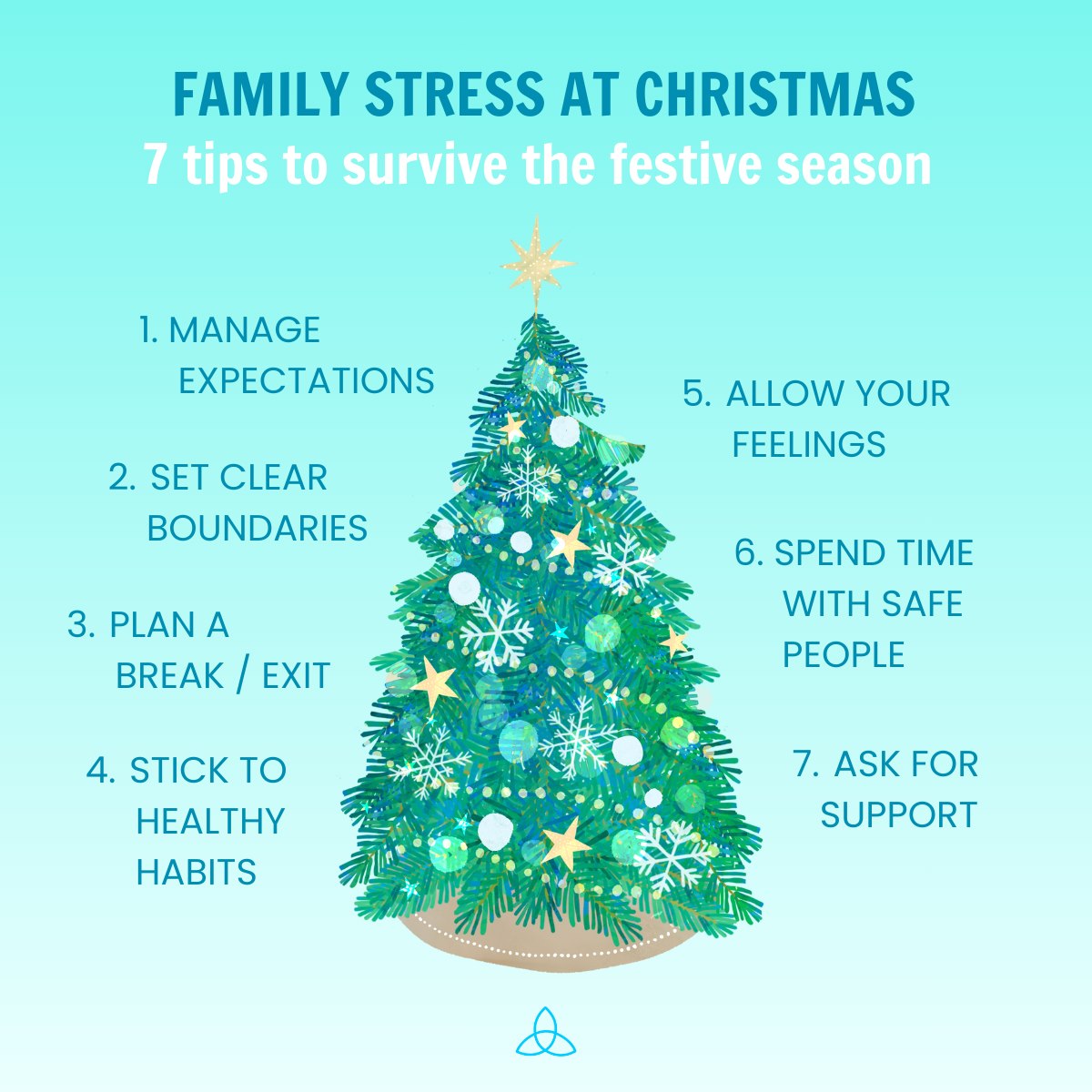
1️⃣ Manage Expectations — Your Own and Other People’s
You don’t have to be the peacekeeper, the host or the one who “keeps everyone happy”.
Decide what you realistically feel able to do – and let that be enough.
Small, clear boundaries can prevent big emotional crashes.
2️⃣ Set Clear Boundaries Around Difficult Conversations
If certain topics have a habit of leading to conflict, it might be helpful to say something like:
“Let’s not get into that today. Shall I get us a drink? / I’ll check on lunch / Oh, there’s Auntie Lesley!”
Protecting your peace isn’t rude — it’s emotionally intelligent.
3️⃣ Plan Your Escape Routes
Whether it’s a short walk, stepping into another room, making a quick call to a friend or going home earlier than others, build in breaks to reduce overwhelm.
Quiet moments can help reset your nervous system.
4️⃣ Maintain Healthy Routines & Habits (as Much as You Can)
Sleep, fresh air, hydration, eating regularly and breathing mindfully are even more important during times of potential stress — they help stabilise mood, stress hormones and emotional resilience.
In tricky moments, even one grounding habit can help, such as drinking a glass of water or doing a round of box breathing or 4-7-8 breathing.
5️⃣ Allow Your Feelings
Christmas may bring up feelings of grief, loneliness, relationship strain or painful memories. You don’t have to push feelings away or pretend everything is fine.
Honouring how you really feel is healthier than suppressing it.
6️⃣ Prioritise the People Who Make You Feel Safe
If family isn’t your safe space, spend time with friends or supportive people too / instead – even if it’s just a phone call or a walk on Boxing Day.
You can redefine what “family time” or a happy Christmas means to you, and with whom you’d like to spend it.
7️⃣ Ask for Support if Things Feel Too Much
If festive stress triggers anxiety, low mood or old trauma, speaking to a friend, GP or counsellor can help you feel more grounded and supported — not just at Christmas, but all year round.
You don’t have to handle everything alone, especially at a time that’s supposed to be about connection.
You Deserve a Calm, Manageable Christmas
If you’d like someone to talk to about family stress, boundaries or anxiety, do reach out for support.
Our qualified counsellors provide affordable therapy sessions online and in person, if that would be helpful for you.
The most important thing is not to suffer in silence – and to remember that Christmas will pass, followed by a new year and the hope of positivity and perspective.
FREQUENTLY ASKED QUESTIONS:
Why does Christmas cause family stress and anxiety?
Christmas often brings long-standing family roles and dynamics back into focus. Familiar patterns may re-emerge, which can feel uncomfortable or triggering — such as being cast again as the peacemaker, the family scapegoat or the “difficult one”.
Increased expectations also play a role. Commercial pressure to create the “perfect” Christmas can heighten stress around gift-giving, finances and hosting. When expectations don’t match reality – or when effort feels uneven or unrecognised – disappointment and tension can arise.
For many, Christmas also amplifies feelings linked to loss, change or unmet needs, making emotions feel more intense than usual.
How can I set boundaries with family at Christmas without causing conflict?
Setting boundaries doesn’t have to mean confrontation. You might try:
- Using time limits: deciding in advance how long you’ll stay, rather than feeling pressured to endure an entire day.
- Changing the focus: gently redirecting conversations towards neutral topics, shared memories or practical tasks.
- Being selective about disclosure: you’re not obliged to explain or justify your choices, relationships or life decisions.
Boundaries are about protecting your emotional energy — not about controlling others.
What can I do if family gatherings feel overwhelming in the moment?
In intense moments, simple grounding techniques can help regulate your nervous system:
- Step away briefly: popping to the bathroom or another room can create a pause.
- Use breathing techniques: slow breathing (such as box breathing or 4-7-8 breathing) can calm the body quickly.
- Anchor to the present: notice physical sensations – your feet on the floor, the temperature of water on your hands, or a familiar object nearby.
These small interventions can reduce overwhelm and help you re-engage on your own terms.
Is it normal to feel anxious or low at Christmas?
Yes – it’s very common. Many people experience increased anxiety or low mood at this time of year and even those who appear cheerful or “fine” may not actually feel that way.
Social media and family expectations can create the illusion that everyone else is coping well, when in reality many people are struggling quietly.
Feeling low or anxious at Christmas doesn’t mean you’re ungrateful or doing something wrong – it often reflects emotional overload, exhaustion or unmet needs.
What can I do if Christmas feels too much overall?
You have more choice than it may feel like. It can help to:
- Limit commitments: reduce how many gatherings you attend, how long you stay or what you offer to organise / contribute.
- Talk things through: chatting with a trusted friend or a counsellor can help you role-play tricky conversations and feel more prepared.
- Give yourself permission to opt out: in some years, stepping back from family celebrations may be the healthiest choice.
- Reflect for the future: if it feels too late to change plans this year, notice what you’d like to do differently next time — and honour that insight.
Christmas is one moment in the year, not a measure of your worth or relationships.